
Diagnostic Technology
Cone Beam (CBCT) 3D Imaging in Cumming, GA
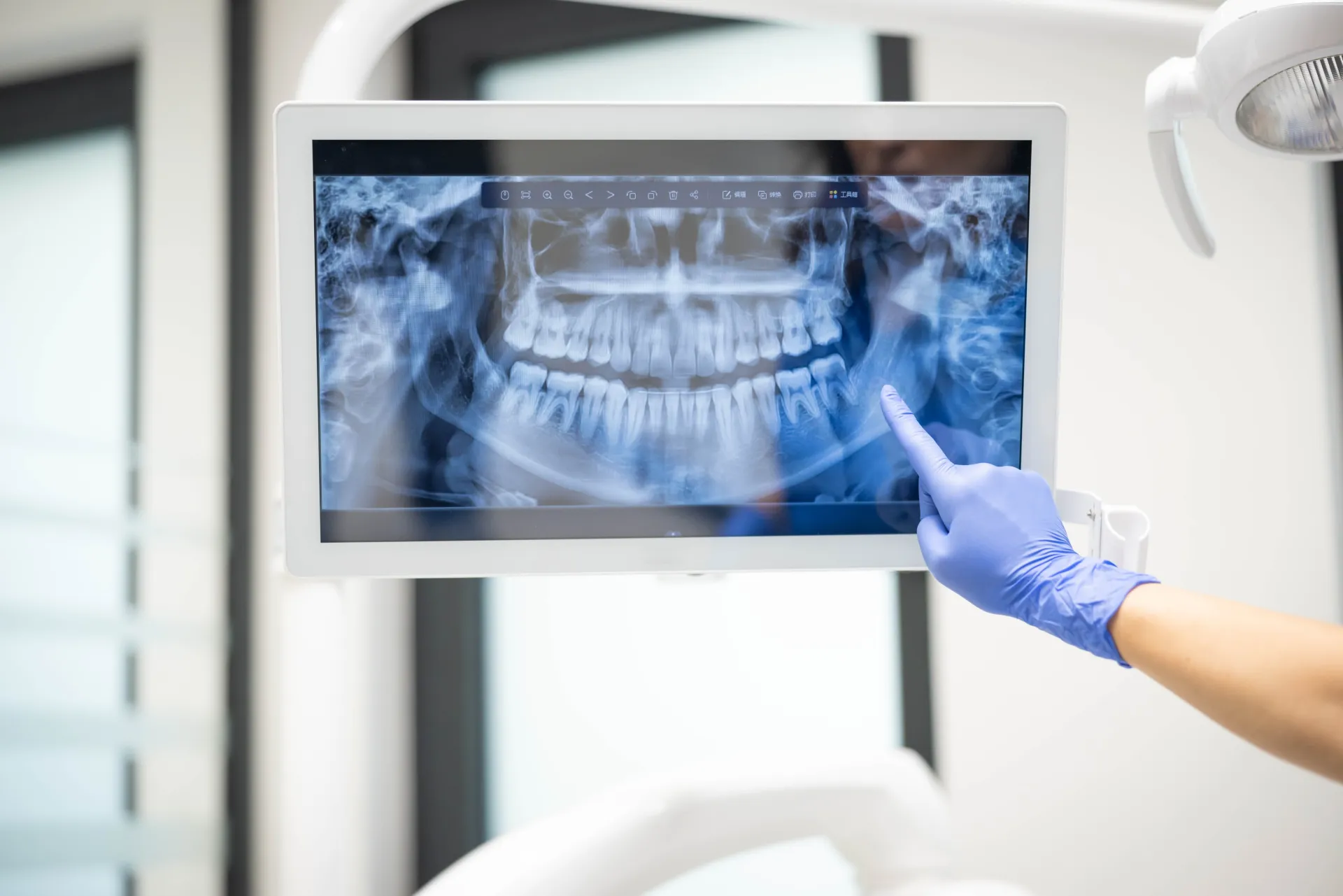
Cone beam computed tomography (CBCT) provides detailed 3D images of your teeth, jawbone, nerves, and sinuses in a single, fast scan. At Jawline Oral Surgery, Dr. William Shin uses in-office CBCT imaging to plan every procedure with precision, from dental implants to wisdom teeth removal.
Understanding CBCT
What Is CBCT Imaging?
CBCT (Cone Beam Computed Tomography) is an advanced imaging technology that captures a 3D view of your oral and maxillofacial structures using a cone-shaped X-ray beam. Unlike traditional dental X-rays, which provide flat, two-dimensional images, CBCT creates a complete three-dimensional model that can be viewed from any angle and sliced into cross-sections.
The scan takes approximately 10 to 40 seconds and is performed right in our Cumming office. You simply stand or sit while the scanner rotates around your head. The resulting images give Dr. Shin a detailed view of bone density, root positions, nerve canals, sinus anatomy, and pathology that cannot be seen on standard X-rays.
Advantages
CBCT vs Traditional Dental X-Rays
Three-Dimensional Detail
Traditional X-rays show flat images that can overlap structures. CBCT provides a true 3D view, revealing anatomy that would otherwise be hidden.
Precise Measurements
CBCT allows exact measurements of bone height, width, and density, which is critical for planning implant placement, bone grafts, and other surgical procedures.
Lower Radiation Than Hospital CT
CBCT uses significantly less radiation than a traditional medical CT scan while still providing the detailed imaging needed for oral surgery planning.
Same-Visit Results
Because our CBCT scanner is in-office, images are available immediately. There is no need for a separate radiology appointment, and Dr. Shin can review results with you during the same visit.
Applications
Procedures That Use CBCT Imaging
CBCT imaging is used to plan and guide a wide range of oral surgery procedures at our practice, including:
Dental Implant Planning
CBCT reveals bone volume, density, and proximity to nerves, allowing computer-guided implant placement with optimal precision.
Wisdom Teeth Assessment
3D imaging shows the exact position and angulation of impacted wisdom teeth relative to the inferior alveolar nerve, guiding safer extractions.
Bone Grafting and Sinus Lifts
CBCT measurements determine the extent of bone loss and sinus proximity, informing bone grafting and sinus lift treatment plans.
Common Questions
CBCT Imaging FAQ
The scan itself takes approximately 10 to 40 seconds. The entire appointment, including positioning and image review, usually takes about 15 to 20 minutes.
Yes. CBCT uses significantly less radiation than a traditional medical CT scan. The focused cone beam targets only the area of interest, further reducing exposure. We follow the ALARA (As Low As Reasonably Achievable) principle for all imaging.
Traditional dental X-rays produce flat, two-dimensional images. CBCT creates a three-dimensional model that shows depth, spatial relationships, and cross-sectional views of your anatomy, providing far more diagnostic information for surgical planning.
CBCT imaging is considered the standard of care for dental implant planning. It allows Dr. Shin to evaluate your bone structure, identify the ideal implant position, and avoid critical anatomical structures during placement.
The cost of a CBCT scan varies. In many cases, the scan is included as part of your treatment consultation. Some dental and medical insurance plans provide coverage for diagnostic imaging. Our team can verify your benefits before your appointment.
See the Full Picture With 3D Imaging
Experience the clarity of CBCT 3D imaging at Jawline Oral Surgery in Cumming, GA. Dr. William Shin uses this advanced technology for every surgical case.